
School Emergency Preparedness for Safer Campuses

Rapid Rescue Kits • August 19, 2026

What Every School Campus Needs for Emergency Preparedness


School emergency preparedness requires more than a first aid kit or an occasional drill. Schools need a clear emergency plan, trained staff, accessible medical supplies, reliable communication, and procedures for evacuation, shelter-in-place, severe weather, and reunification.


A strong plan should reflect the actual risks facing each campus. Those risks may include tornadoes, severe storms, fires, medical emergencies, hazardous materials, power outages, or other events that disrupt a normal school day.


For administrators, nurses, teachers, coaches, and facility teams, the goal is not to predict every emergency. The goal is to create a system that helps people respond quickly when something unexpected happens.


People gathered around a table reviewing papers with a red first-aid kit and water bottles nearby

What Should a School Emergency Preparedness Plan Include?


A school emergency preparedness plan should explain who takes action, how information is shared, where people go, and what resources are available during an emergency.


The U.S. Department of Education recommends that schools develop a comprehensive Emergency Operations Plan, often called an EOP. The plan should reflect the school’s specific buildings, population, hazards, and community resources.


A strong school emergency plan should address:


  • Emergency leadership roles
  • Communication with staff and families
  • Student and staff accountability
  • Evacuation procedures
  • Shelter-in-place procedures
  • Severe weather response
  • Medical emergencies
  • Students and staff with disabilities or access needs
  • Family reunification
  • Coordination with police, fire, EMS, and emergency management
  • Recovery after an incident


Schools should also consider what happens when the usual plan cannot be followed. An evacuation route may become blocked. Power or internet service may fail. Key staff members may be absent.


Planning for these complications can make the Emergency Operations Plan more useful in a real crisis.


What Emergency Supplies Should Schools Keep on Campus?


Schools should keep emergency medical, communication, safety, and basic preparedness kits in locations where trained staff can reach them quickly.


Basic first aid supplies remain important for everyday cuts, scrapes, burns, and minor injuries. However, school emergency preparedness should also consider serious injuries that require immediate action before emergency medical services arrive.


Depending on the campus and its emergency plan, supplies may include:


  • First aid supplies
  • Bleeding control equipment
  • Tourniquets
  • Trauma dressings
  • CPR barriers or masks
  • Disposable medical gloves
  • Splints and wraps
  • Emergency blankets
  • Flashlights and spare batteries
  • Portable charging devices
  • Emergency radios
  • Whistles
  • Basic sanitation supplies
  • Emergency contact information


Schools should assess the needs of students who rely on medications or medical devices. Those plans should follow school policy and applicable medical requirements.

Emergency supplies should support the larger preparedness plan rather than replace it. Equipment is most useful when staff know where it is, understand its purpose, and have appropriate training.


Rapid Rescue Kits provides professional emergency response kits with bleeding control, immobilization, CPR support, shock management, and other supplies for serious injuries. Schools can use these kits as one part of a broader campus emergency preparedness strategy.


School hallway with a staff member using a fire extinguisher cabinet and students nearby

Where Should Schools Store Emergency Kits and Supplies?


Emergency supplies should be placed where authorized staff can reach them quickly during the types of incidents the school is preparing to handle.


One central kit may not provide enough coverage for a large campus. A student could be injured on an athletic field while the main emergency supplies are stored across the building in the nurse's office.


Schools should consider supplies near:


  • Main offices and security stations
  • School health or nurse offices
  • Gymnasiums
  • Athletic fields
  • Cafeterias
  • Auditoriums and assembly spaces
  • Science and technical classrooms
  • High-traffic hallways
  • Transportation offices
  • School buses
  • After-school activity areas


Placement should reflect both risk and response time.


Schools with multiple buildings, large athletic complexes, or extensive outdoor areas may need several emergency response points. Administrators should also make sure relevant staff know exactly where those supplies are kept.


School buses deserve special attention. Students may be miles from campus when a medical emergency, accident, or severe weather event occurs. Emergency planning should account for transportation as well as the main school building.


How Should Schools Prepare for Evacuation, Shelter-in-Place, and Severe Weather?


Schools should develop separate procedures for evacuation, shelter-in-place, and severe weather because each emergency may require a different response.


An evacuation moves students and staff away from a danger. A shelter-in-place procedure keeps people inside a designated safe area when leaving may create greater risk.


Severe weather adds another layer of planning. Tornadoes, thunderstorms, flooding, extreme heat, winter weather, and wildfires can create very different conditions depending on the school's location.


A severe weather emergency plan should address:


  • Where students and staff should move
  • How warnings will be communicated
  • How attendance will be verified
  • What happens during arrival or dismissal
  • How students on buses or athletic fields are handled
  • How families receive reliable updates
  • What happens if normal transportation is unavailable


Schools should also identify alternate evacuation routes and shelter areas. The safest location during one emergency may be inappropriate during another.


Emergency procedures should account for younger students and people with disabilities or other access and functional needs. A plan works only when everyone on campus can participate safely.


Meeting room with five people discussing an emergency preparedness presentation on a wall screen and whiteboard

How Often Should Schools Review and Practice Emergency Plans?


Schools should review emergency plans regularly and update them whenever drills, real incidents, staffing changes, construction, or new risks reveal a weakness.


Training and exercises help schools determine whether written procedures work in practice. Drills should be appropriate for the students' ages and the type of emergency being practiced.


Schools can use exercises to evaluate questions such as:


  • Did staff understand their roles?
  • Could everyone hear or receive the emergency alert?
  • Were students accounted for?
  • Were evacuation routes practical?
  • Could staff access emergency medical supplies?
  • Were accommodations effective for people with disabilities?
  • Did communication with first responders work?
  • What should change before the next exercise?


Emergency planning should also involve local first responders. Police, fire departments, emergency medical services, and local emergency management personnel can provide valuable insight into campus access, communications, evacuation routes, and emergency resources.


After a drill or actual incident, administrators should document what worked and what needs improvement. An emergency plan should change as the campus changes.


Rapid Rescue Kits supports school emergency preparedness for K–12 campuses and educational facilities across the United States. Our emergency response kits give schools access to organized trauma, bleeding control, CPR, immobilization, and shock-management supplies when rapid medical response matters.


Review your campus plan, identify gaps in emergency equipment, and make sure critical supplies are available before an incident occurs. Explore Rapid Rescue Kits for school emergency response needs or contact the Rapid Rescue Kits team about outfitting multiple buildings, athletic facilities, buses, or campuses.


Frequently Asked Questions


  • Q: What is school emergency preparedness?

    A: School emergency preparedness is the process of planning, training, equipping, and coordinating for emergencies that could affect students, staff, and visitors. It includes an Emergency Operations Plan, communication procedures, drills, medical supplies, evacuation planning, and recovery preparation.

  • Q: What should be included in a school emergency plan?

    A: A school emergency plan should cover communication, evacuation, shelter-in-place, severe weather, medical emergencies, student accountability, family reunification, accessibility needs, and coordination with first responders. The plan should reflect the specific hazards and layout of the campus.

  • Q: What emergency supplies should schools have?

    A: Schools should maintain first aid supplies and other equipment that matches their emergency risks. Depending on the campus, this may include bleeding control supplies, CPR equipment, gloves, splints, emergency blankets, flashlights, communication tools, and other preparedness resources.

  • Q: Where should emergency kits be placed in schools?

    A: Emergency kits should be placed where authorized staff can reach them quickly. Common locations include school offices, health rooms, gyms, athletic fields, cafeterias, assembly spaces, transportation areas, and school buses.

  • Q: How often should schools update emergency preparedness plans?

    A: Schools should review emergency plans regularly and after drills, actual incidents, facility changes, staffing changes, or newly identified risks. Plans should evolve as the school and its emergency needs change.

Woman in a gray blazer organizing a medical kit at a desk in a bright office
By Rapid Rescue Kits July 9, 2026
Celebrate International Emergency Kit Day by building or updating your emergency kit. Learn what supplies every home, business, and vehicle should have stored.
White SUV with open tailgate, showing an emergency supply kit in the cargo area on a desert road.
By Rapid Rescue Kits Editorial Team June 29, 2026
Learn how to build a go bag for emergencies with this step-by-step guide. Discover go bag essentials, bug out bag checklists, and emergency preparedness tips.
Workers in high-vis gear at an industrial factory with safety signs and equipment rows
By Rapid Rescue Kits Editorial Team May 29, 2026
Learn how many first aid kits your small or large business needs based on employee count, facility size, workplace hazards, & OSHA workplace safety recommendations.
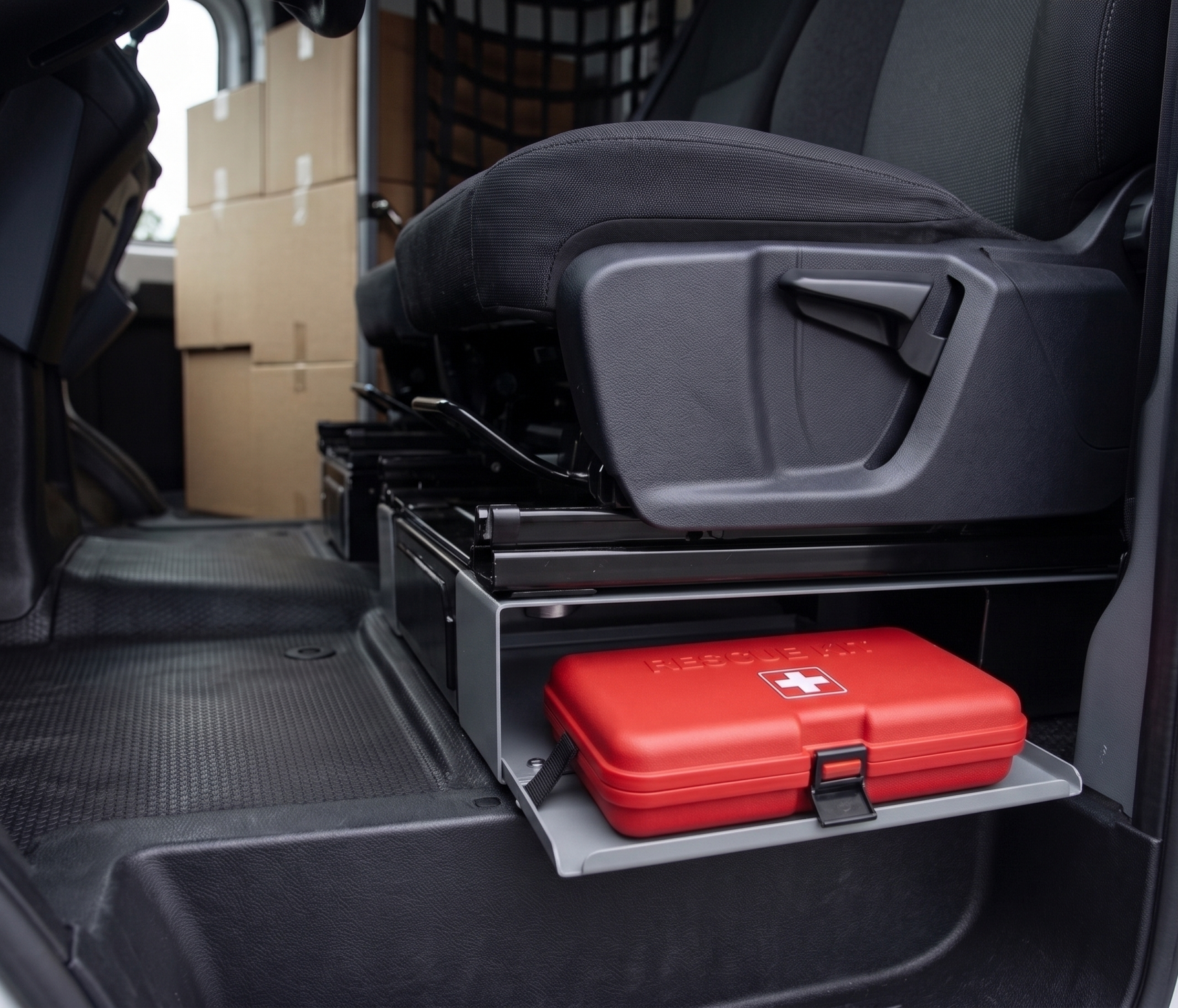
Red first aid kit on a slide-out tray inside a vehicle cargo area under a gray seat.
By Rapid Rescue Kits Editorial Team April 29, 2026
Learn what every company vehicle should carry in an emergency kit, including first aid supplies, roadside gear, and fleet safety essentials. Rapid Rescue Kits.
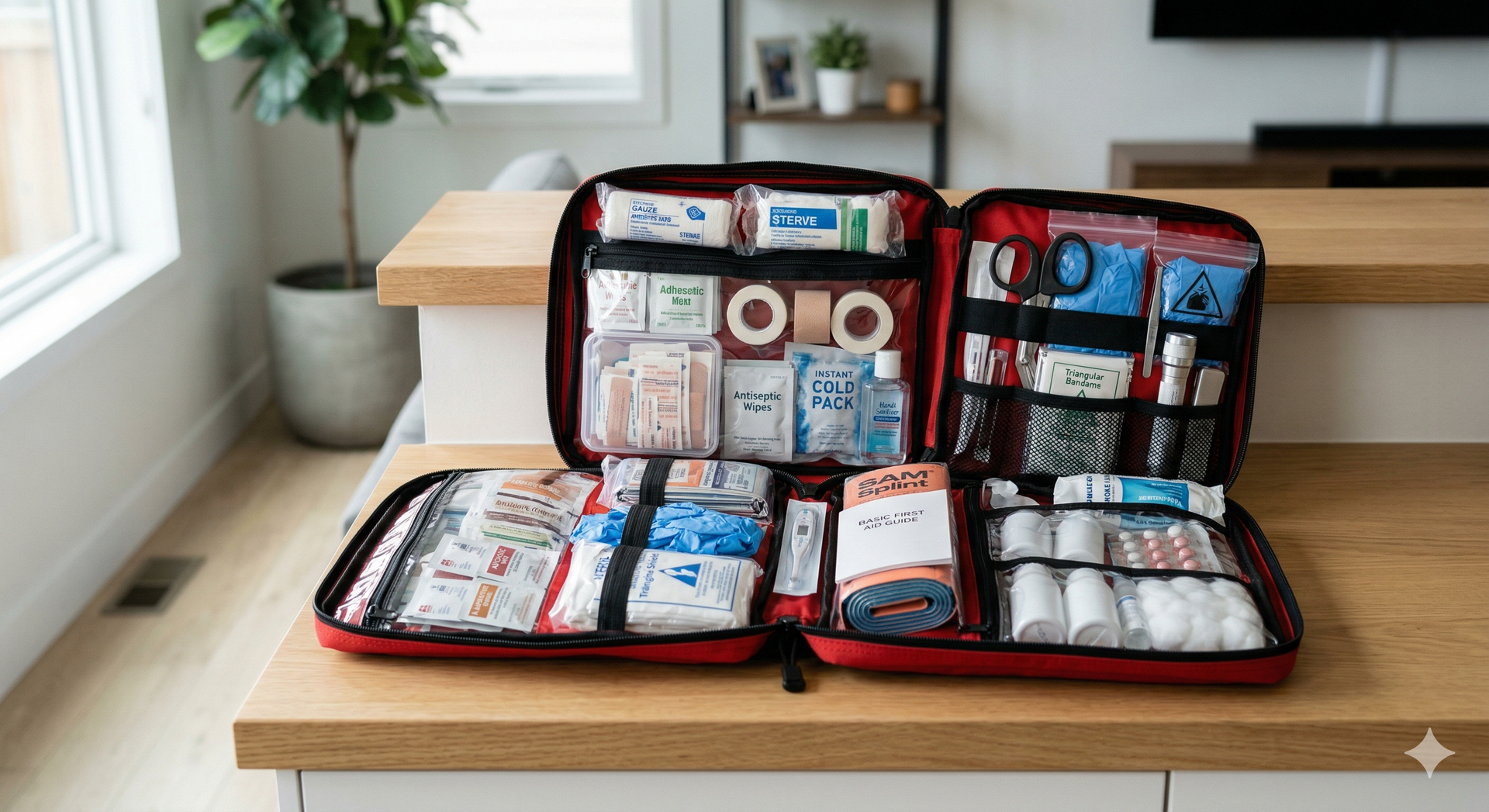
An open, red first aid kit filled with various medical supplies, organized in clear compartments on a wooden surface.
By Rapid Rescue Kits Editorial Team April 1, 2026
Learn what should be in an emergency kit with a complete checklist for home, workplace, and travel preparedness. Stay ready for any emergency situation or need.

A busy office setting features a wall-mounted first aid kit in the foreground with people working at desks in the background.
By Rapid Rescue Kits Editorial Team March 31, 2026
Learn the OSHA first aid kit requirements for businesses, ANSI requirements, what to include, and how to stay compliant with workplace safety standards in 2026.
Rapid Rescue Kits emergency trauma bag staged at outdoor adventure basecamp for remote emergency
By Rapid Rescue Kits Editorial Team February 28, 2026
Outdoor operators face unique risks. Learn why ski resorts, rafting companies, and guides trust Rapid Rescue Kits for emergency preparedness.
Rapid Rescue Kits emergency trauma bag mounted on office wall for fast workplace emergency response
By Rapid Rescue Kits Editorial Team February 12, 2026
Protect employees and reduce risk with professional emergency response kits. Learn why businesses trust Rapid Rescue Kits for real emergencies.
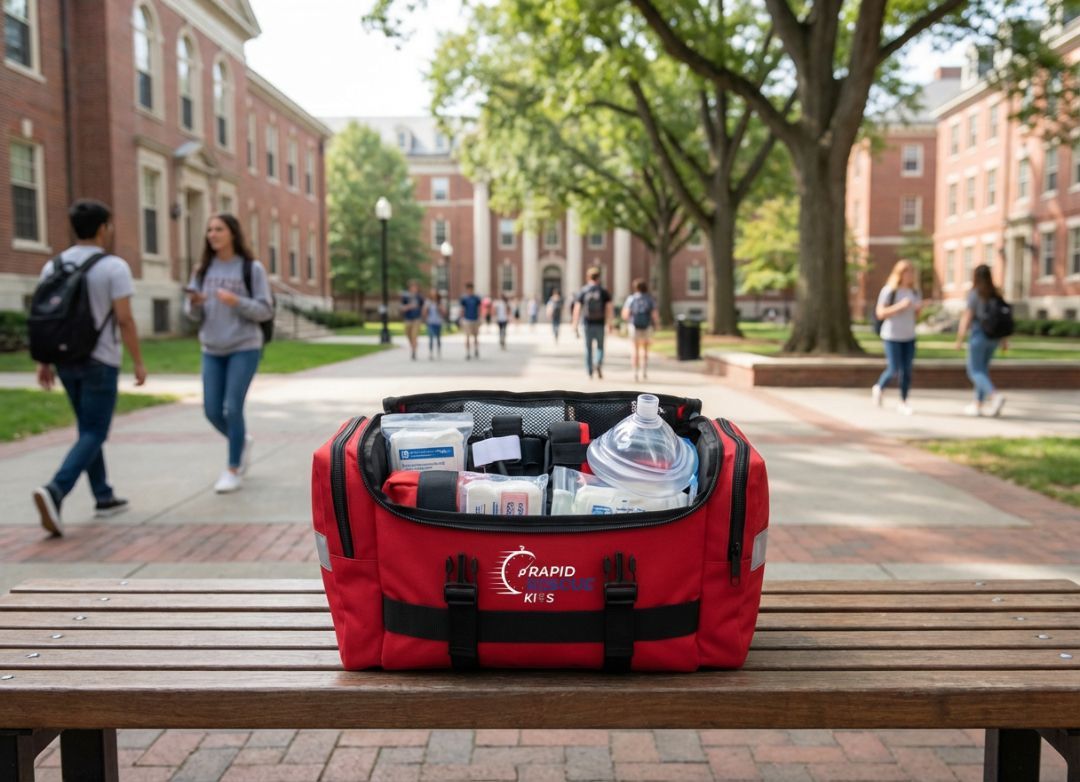
Red medical bag on a bench in front of a university building with students walking.
By Rapid Rescue Kits Editorial Team January 29, 2026
Discover why Stop the Bleed kits are essential for schools, what supplies they should include, where to place them on campus, and how trauma preparedness protects students and staff.
Red medical bag and green first aid kit on black background.
By Rapid Rescue Kits Editorial Team January 15, 2026
Learn the difference between a trauma kit and a first aid kit, what each one is designed for, and how to choose the right emergency kit for home, work, sports, or travel readiness.
Show More