



OSHA First Aid Kit Requirements for Businesses (2026)
Understanding
OSHA First Aid Kit Requirements
for Workplace Safety
Every business in the United States is responsible for providing adequate first aid supplies to protect employees in the event of an injury. OSHA does not mandate a single, universal checklist for every workplace, but it does require that employers ensure readily accessible and appropriate first aid supplies based on the specific hazards present in their environment.
Failing to meet OSHA first aid kit requirements can result in compliance issues, increased liability, and delayed response times during emergencies. For businesses in 2026, having a properly equipped workplace
emergency kit is not just a recommendation—it is a critical part of maintaining a safe and compliant operation.

What OSHA Actually Requires for First Aid Kits
OSHA standard 29 CFR 1910.151 states that employers must ensure medical personnel are available for advice and consultation and that adequate first aid supplies are readily accessible. While OSHA does not publish a fixed list for every industry, it references ANSI/ISEA Z308.1 standards as a guideline for first aid kit contents.
In practical terms, this means:
- First aid kits must be easily accessible to employees at all times
- Supplies must be appropriate for the types of injuries that could occur
- Kits must be regularly inspected and restocked
- Employees should be trained or have access to trained responders
The key takeaway is that OSHA compliance is based on risk assessment, not a one-size-fits-all kit.
What Should Be Included in an OSHA-Compliant First Aid Kit
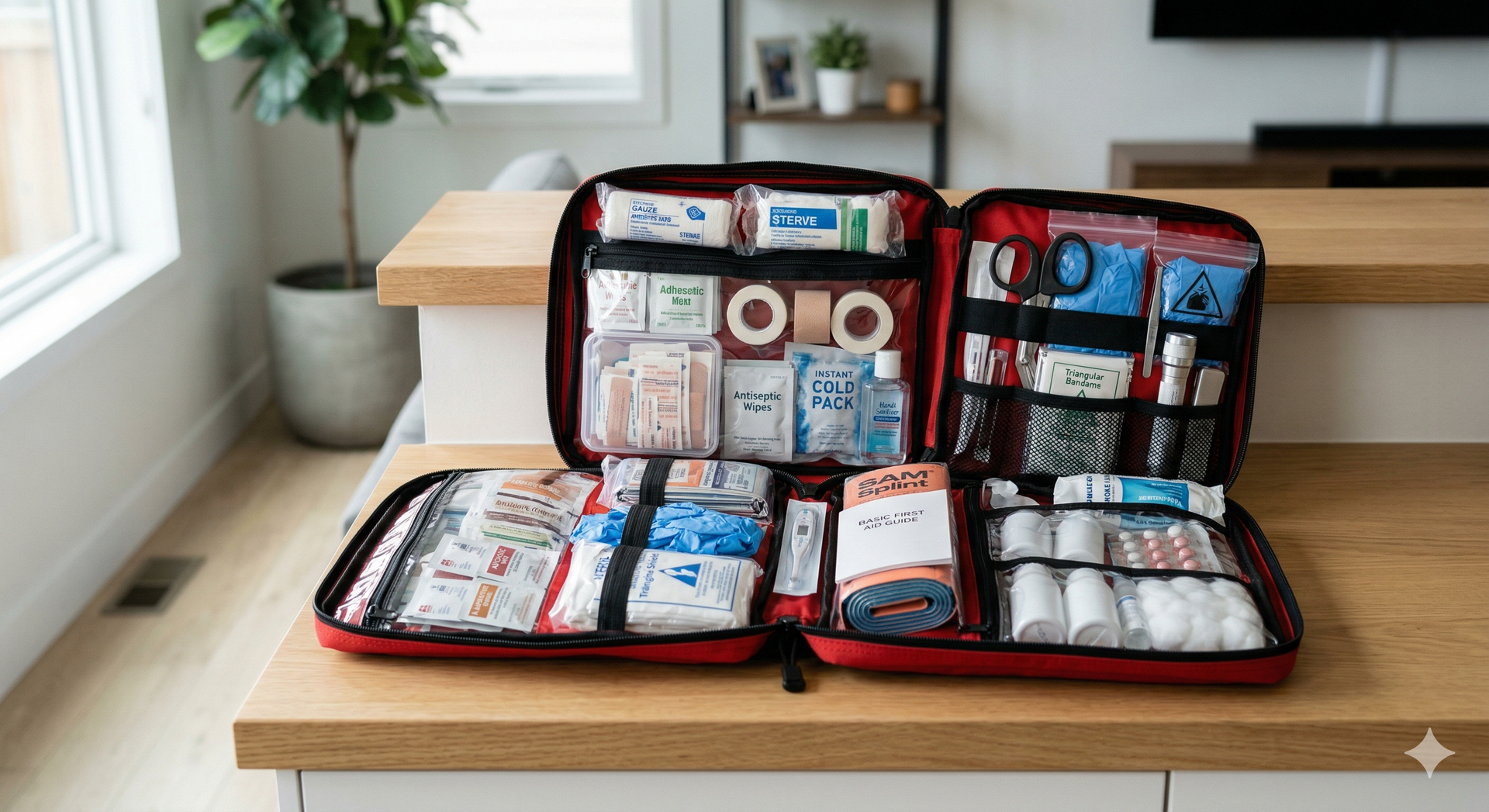
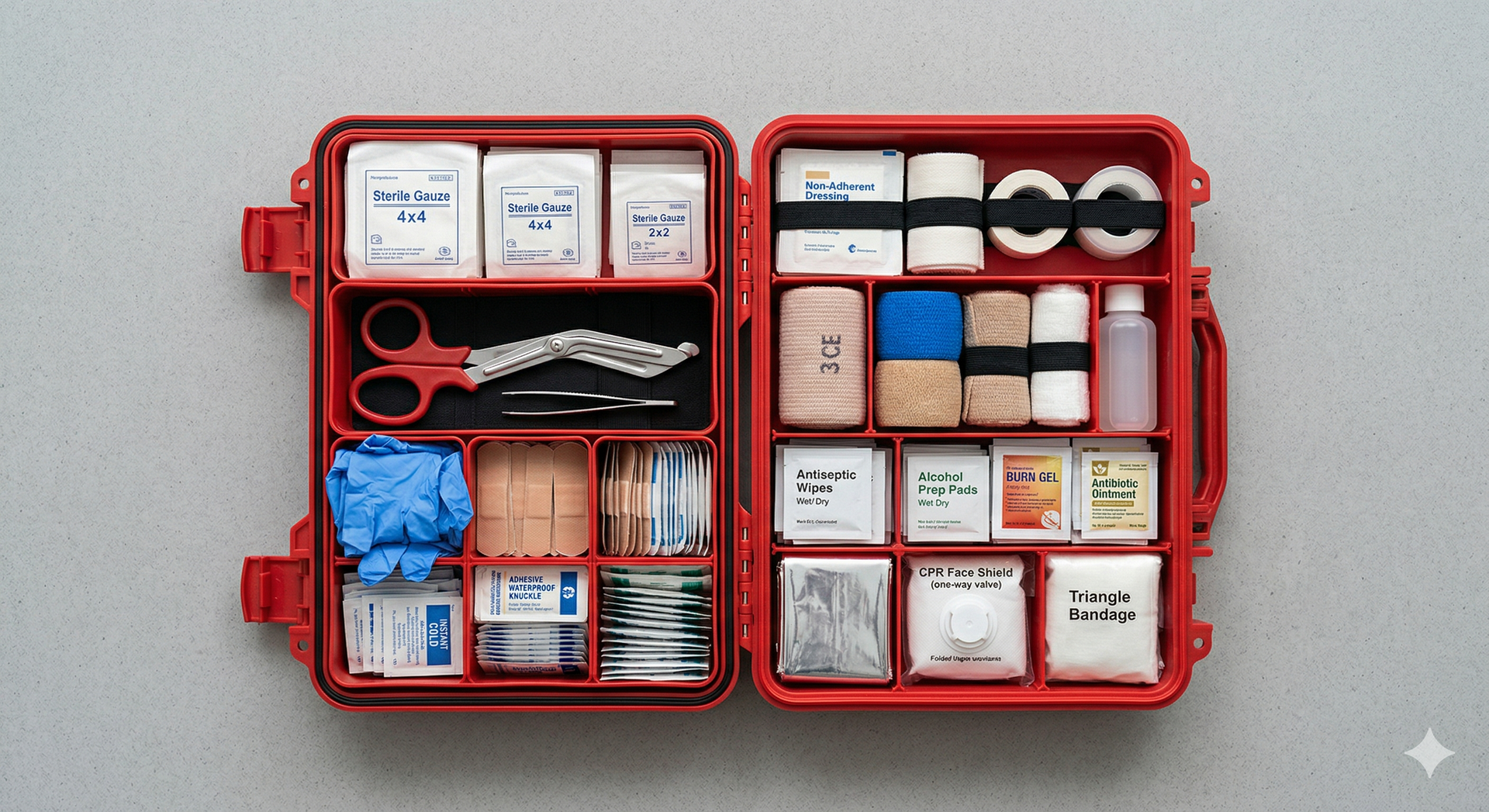
Although requirements vary by industry, most OSHA-aligned workplace first aid kits include the following essential items:
- Adhesive bandages in multiple sizes
- Sterile gauze pads and rolls
- Adhesive medical tape
- Antiseptic wipes or solutions
- Antibiotic ointment
- Burn treatment supplies
- Eye wash or saline solution
- Disposable gloves (non-latex recommended)
- Scissors and tweezers
- CPR barrier or face shield
- Instant cold packs
For higher-risk environments such as construction sites, manufacturing facilities, or industrial settings, additional supplies may be necessary, including:
- Tourniquets
- Trauma dressings
- Hemostatic agents
- Splints
- Emergency blankets
These enhanced kits are often referred to as trauma kits or professional emergency response kits, and they are essential in workplaces where serious injuries are more likely.

How Workplace Risk Determines Your
First Aid Kit
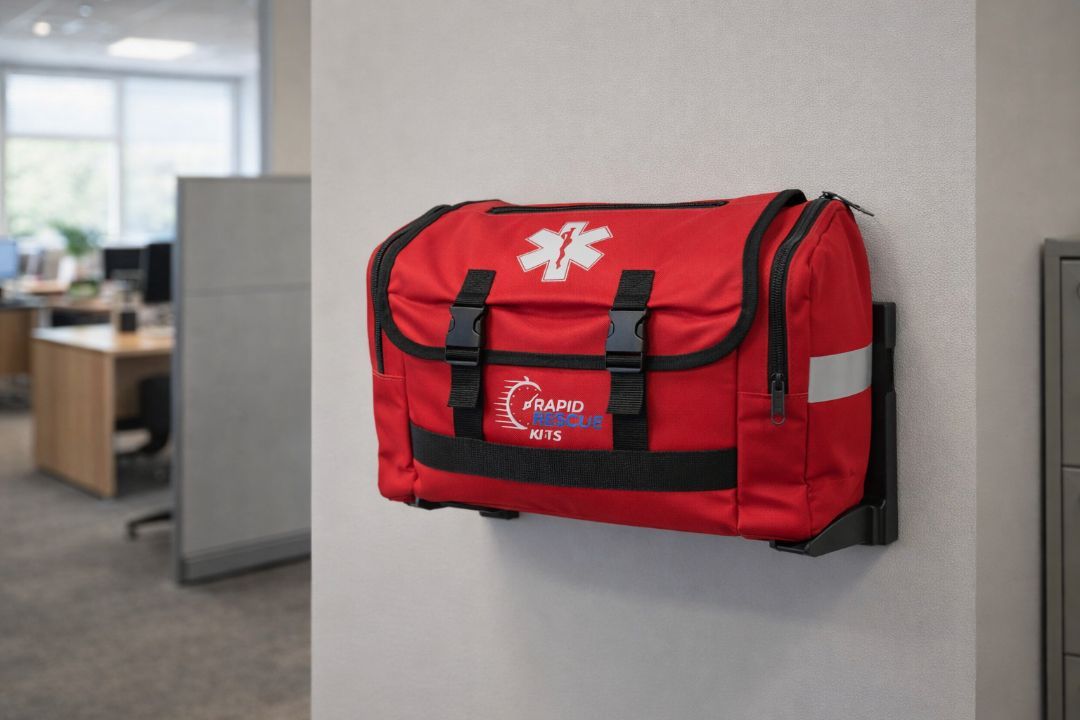
OSHA compliance depends heavily on the specific risks associated with your business. A corporate office will require a different level of preparedness than a construction site or warehouse.
For example:
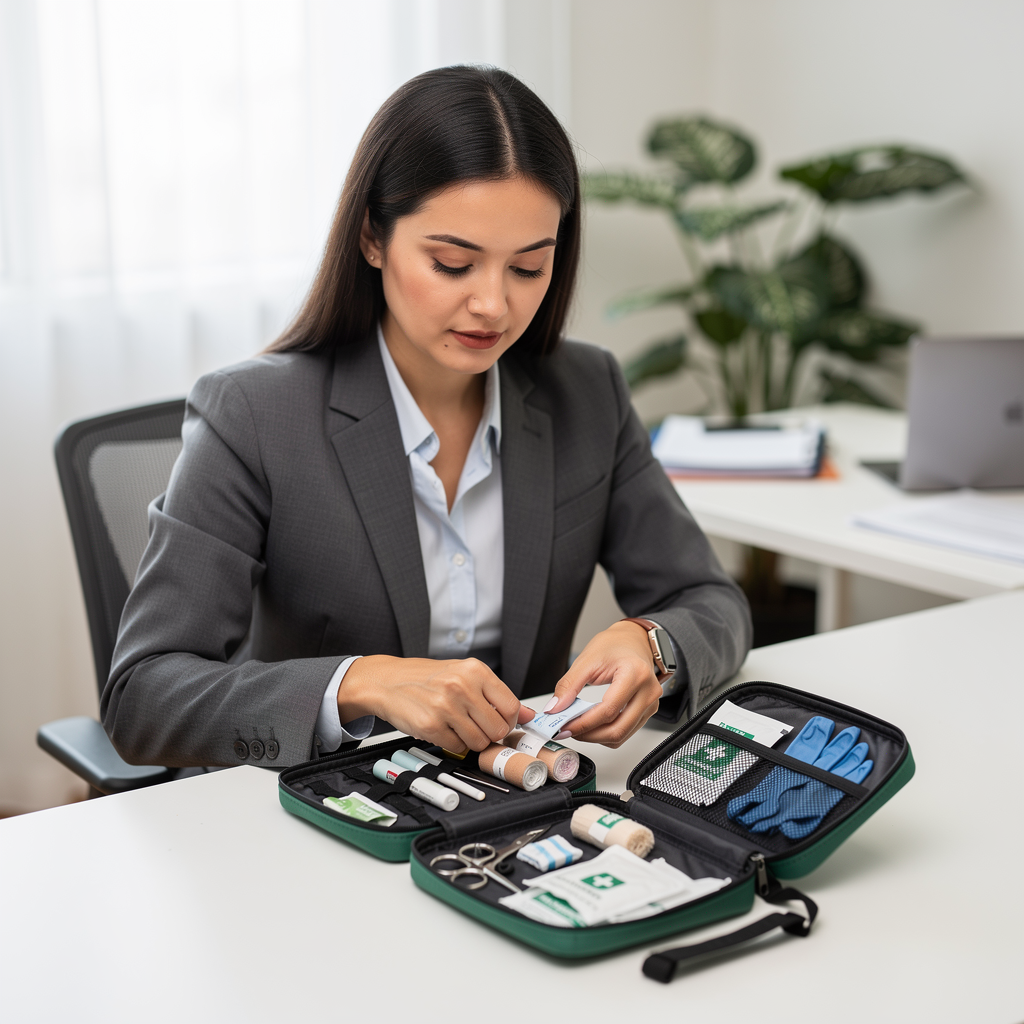
- Offices typically need basic first aid supplies for minor injuries
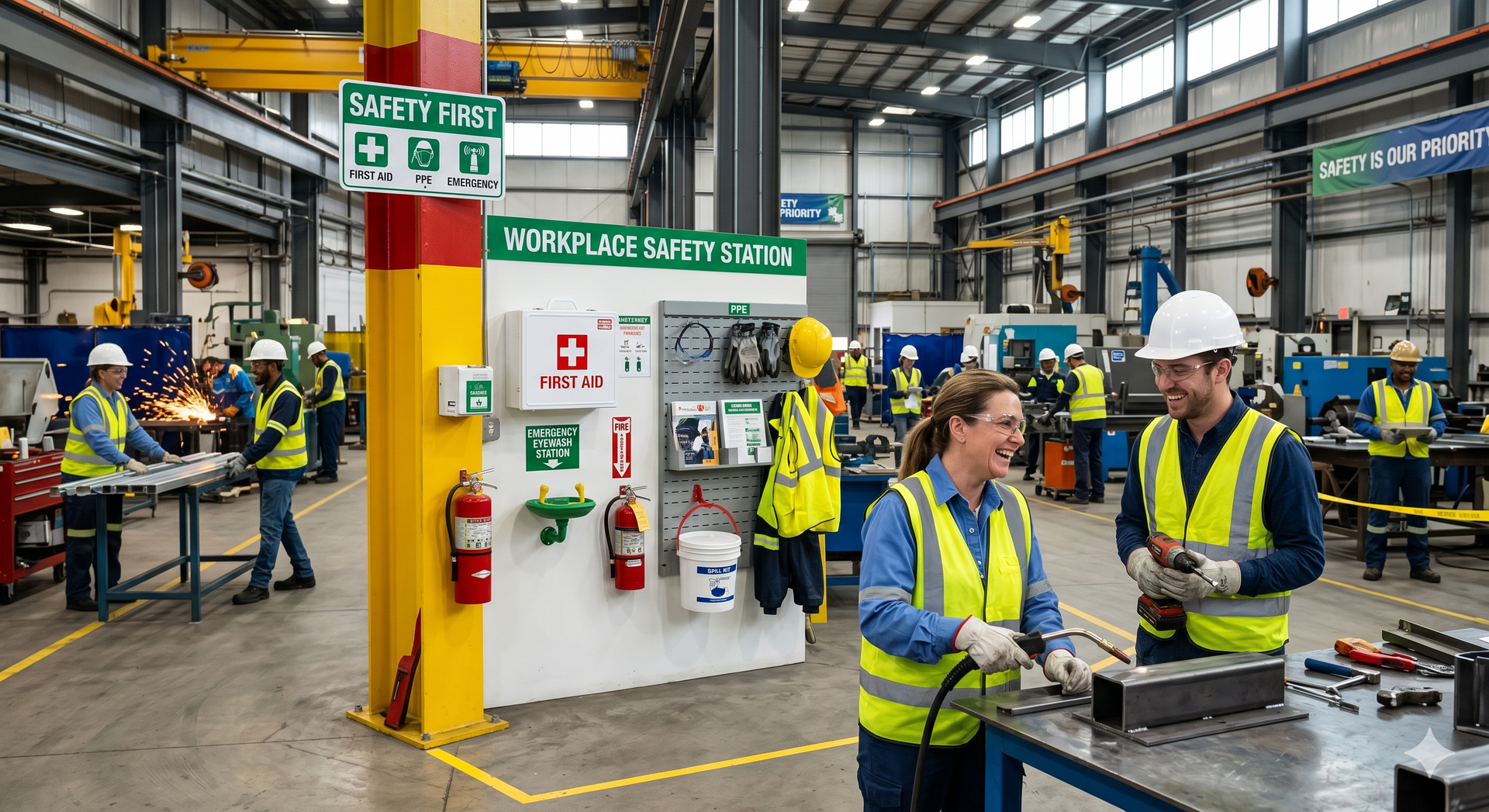
- Construction sites require trauma-level supplies for severe injuries
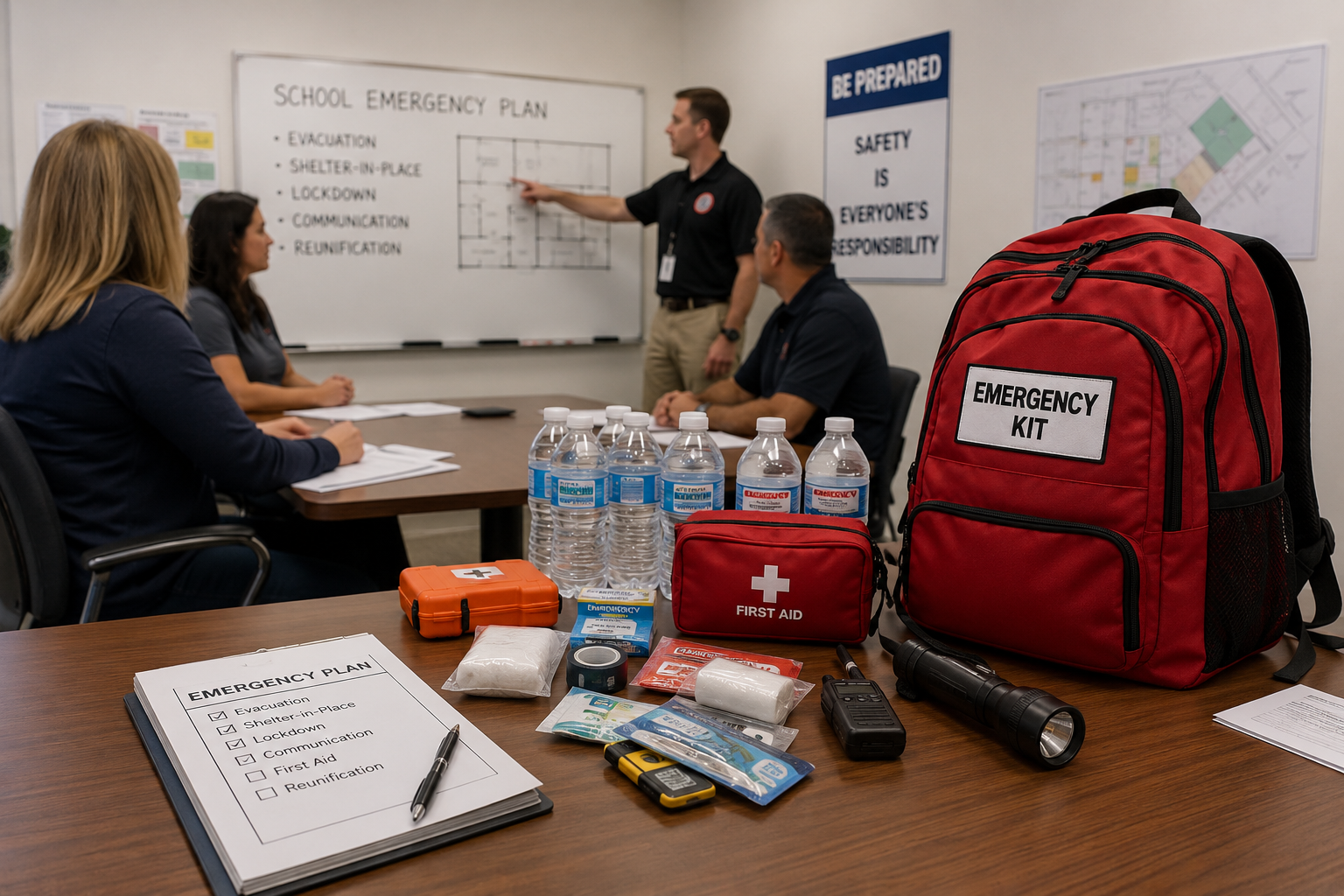
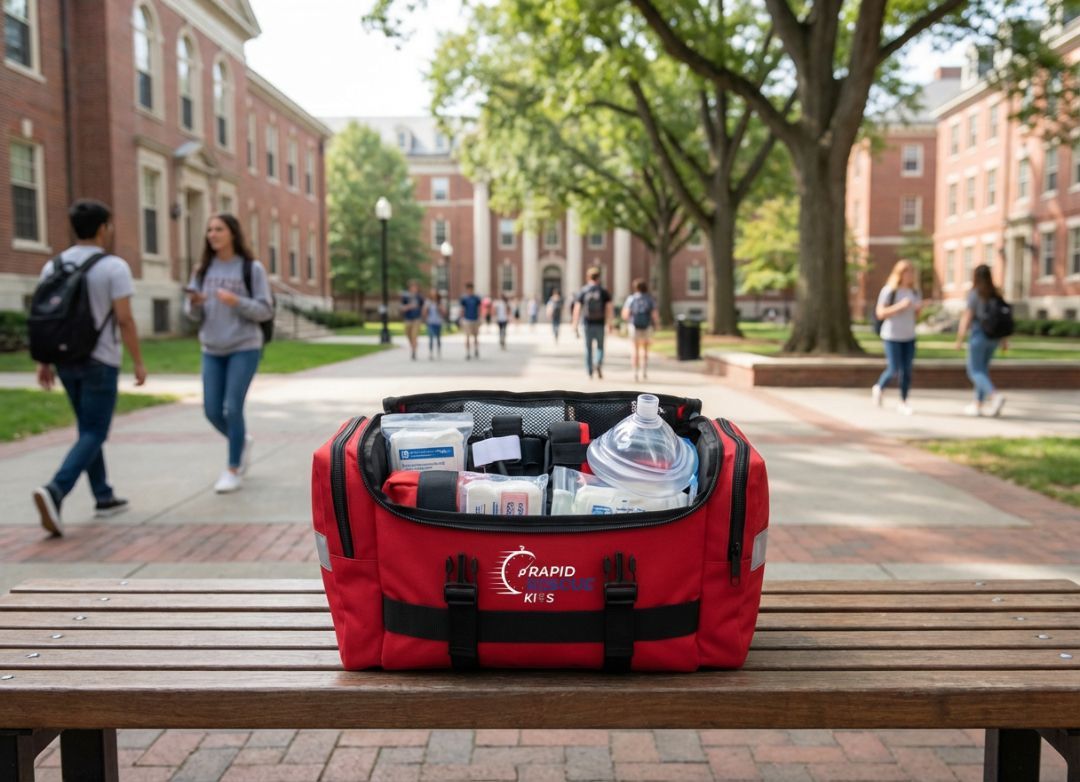
- Schools and campuses need kits that address a wide range of potential incidents
- Retail and hospitality businesses require accessible kits for both staff and customers
Conducting a workplace hazard assessment is the most effective way to determine what your first aid kit should include. This ensures your supplies match real-world risks rather than generic assumptions.
How Many First Aid Kits Does a Business Need?
There is no fixed OSHA rule for the number of kits required, but they must be readily accessible to employees. This generally means:
- Large facilities should have multiple kits distributed throughout the space
- Multi-floor buildings should have at least one kit per level
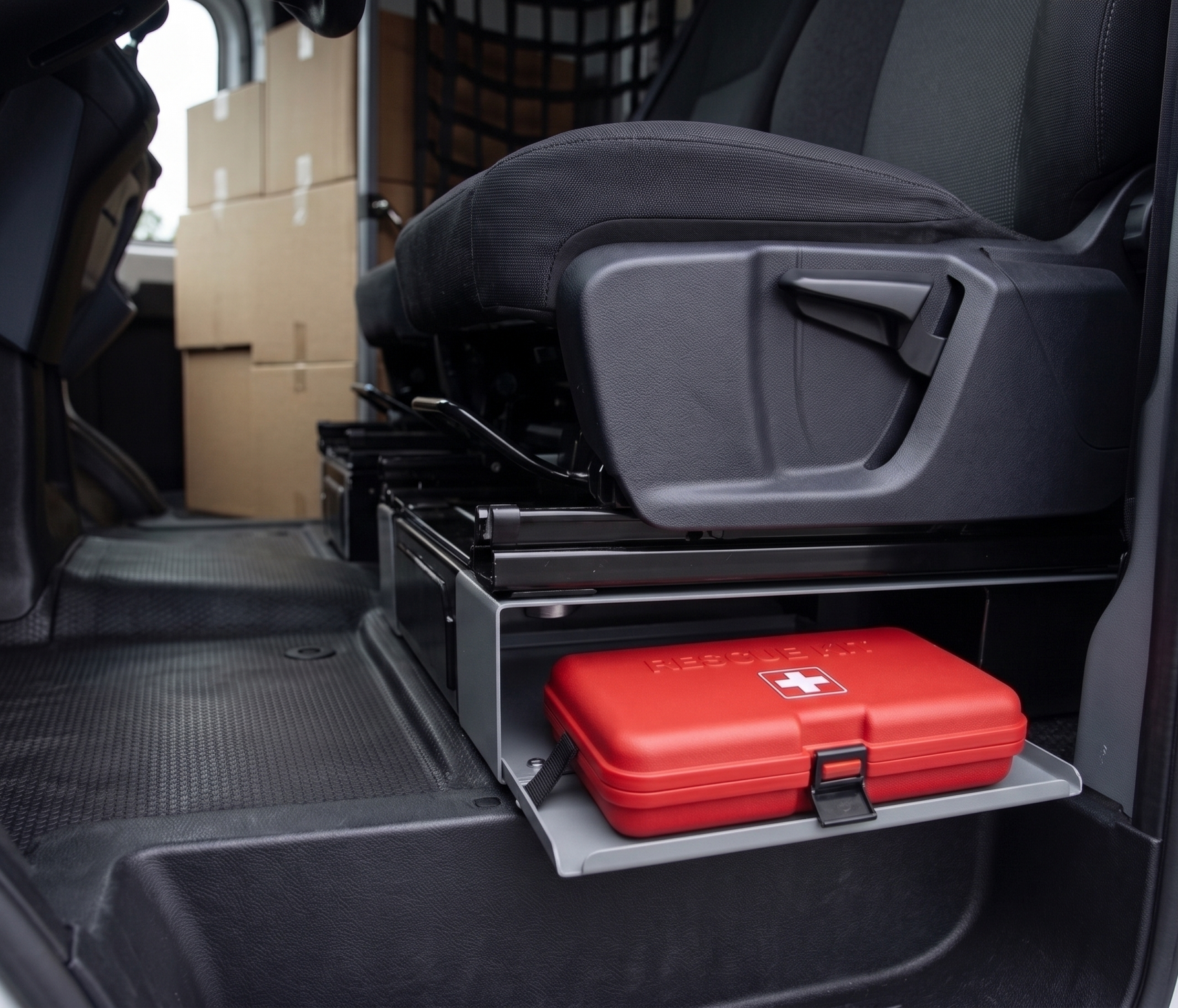
- Remote job sites should have portable kits available at all times
- High-risk areas may require specialized kits nearby
A good rule of thumb is that employees should be able to access a first aid kit within minutes of an incident.

The Importance of
Maintenance and Inspection
Having a first aid kit is not enough—OSHA expects that kits are properly maintained. This includes:
- Regular inspections to ensure supplies are fully stocked
- Replacing expired or damaged items
- Updating kits as workplace risks change
- Ensuring items are clean, organized, and easy to use
Neglected or incomplete kits can be just as problematic as having no kit at all, especially during an emergency when every second matters.
Why Basic First Aid Kits Are Often Not Enough
Many businesses rely on inexpensive, generic first aid kits that are not designed for real workplace hazards. While these kits may meet minimal expectations, they often fall short in critical situations.
Professional-grade emergency kits are designed to:
- Address both minor and severe injuries
- Provide faster, more effective response tools
- Support workplace safety compliance
- Reduce liability by improving emergency readiness
For businesses serious about safety, upgrading to a more comprehensive emergency response kit is a smart and responsible decision.

Choosing the Right Emergency Kit
for Your Business
Selecting the right kit starts with understanding your environment, workforce size, and potential risks. A well-equipped workplace emergency kit should:
- Align with OSHA and ANSI standards
- Be tailored to your industry
- Include both basic and advanced supplies when needed
- Be easy to access and clearly labeled
Businesses that invest in the right equipment are better prepared to protect employees, reduce downtime, and respond effectively when emergencies occur.
Be Prepared Before an
Emergency Happens
Workplace injuries can happen at any time, and preparation is the difference between a controlled response and a chaotic situation. Ensuring your business meets OSHA first aid kit requirements is one of the most important steps you can take to protect your team.
Rapid Rescue Kits provides professional-grade emergency response kits designed for real-world workplace scenarios. Whether you operate an office, construction site, school, or commercial facility, having the right equipment in place helps you stay compliant, prepared, and confident in your ability to respond.
If you are ready to improve your workplace safety and emergency preparedness, explore our complete line of emergency kits designed specifically for businesses.
Frequently Asked Questions
Q: Does OSHA require a specific list of items in a first aid kit?
A: No, OSHA does not mandate a universal list. However, it requires that first aid supplies be appropriate for workplace hazards, and many businesses follow ANSI/ISEA Z308.1 guidelines.
Q: How often should workplace first aid kits be checked?
A: First aid kits should be inspected regularly, typically monthly, to ensure supplies are fully stocked and not expired.
Q: Do small businesses need to follow OSHA first aid requirements?
A: Yes, OSHA requirements apply to businesses of all sizes, although the type and quantity of supplies may vary based on risk.
Q: What is the difference between a basic first aid kit and a professional emergency kit?
A: Basic kits are designed for minor injuries, while professional emergency kits include advanced supplies for more serious incidents, making them more suitable for higher-risk environments.