
Emergency Evacuation Plan for Businesses
How to Prepare an Emergency Evacuation Plan for Your Business
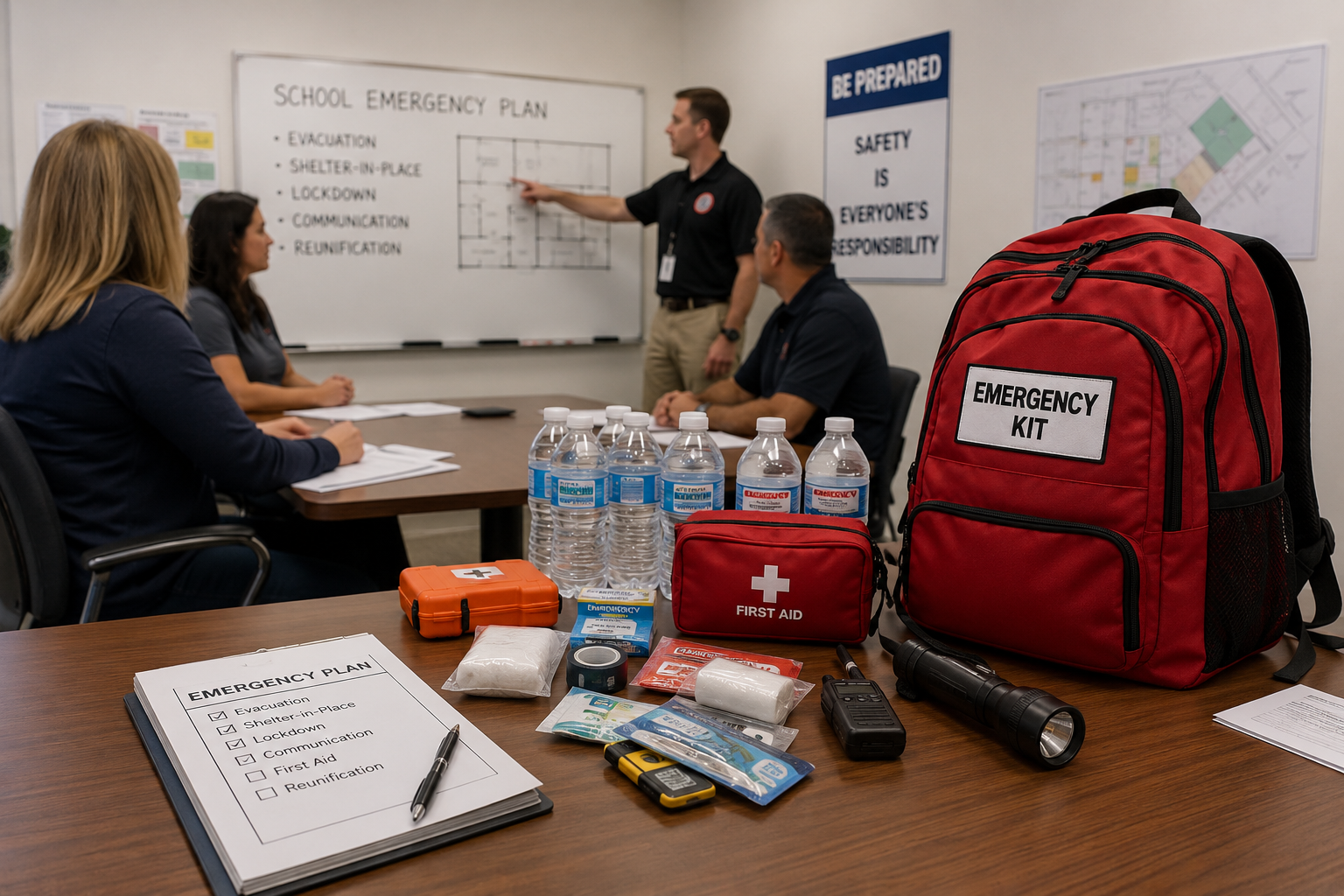
An emergency evacuation plan tells employees how to leave the workplace safely when an emergency makes evacuation necessary. A strong plan identifies evacuation routes, employee responsibilities, meeting areas, communication methods, and procedures for accounting for everyone after they leave.
Fires are only one reason a workplace may need to evacuate. Severe storms, chemical releases, gas leaks, flooding, utility emergencies, workplace violence, and other hazards can also force employees to leave quickly.
September is a good time for businesses to review these procedures before fall and winter bring new weather and safety risks. An effective emergency action plan helps employees know what to do before an alarm sounds.

What Is an Emergency Action Plan for a Business?
An emergency action plan, often called an EAP, explains how a business and its employees will respond to workplace emergencies. An evacuation plan is one important part of that larger emergency response strategy.
OSHA requires an emergency action plan when certain workplace standards apply. Under 29 CFR 1910.38, a required EAP generally must be written, kept at the workplace, and available for employee review. Businesses with 10 or fewer employees may communicate the plan orally.
Even when a specific OSHA rule does not require a written plan, creating one gives employees a clear process to follow during an emergency.
A business emergency preparedness plan may address:
- Fires
- Severe storms and tornadoes
- Flooding
- Hazardous material incidents
- Gas leaks
- Explosions
- Power failures
- Workplace violence
- Other hazards specific to the worksite
The plan should reflect the actual building, workforce, equipment, and risks of the business.
What Must Be Included in a Workplace Emergency Action Plan?
A workplace emergency action plan should clearly explain how emergencies are reported, when employees evacuate, where they go, and how the business confirms everyone is safe.
OSHA identifies several minimum elements for EAPs that fall under its emergency action plan standard. These include:
- Procedures for reporting fires and other emergencies
- Emergency evacuation procedures
- Assigned evacuation routes
- Procedures for employees who must operate critical equipment before leaving
- A method for accounting for employees after evacuation
- Rescue or medical duties assigned to designated employees
- Names or job titles of people employees can contact about the plan
Businesses should also think beyond the minimum requirements.
A practical emergency evacuation plan should address employees who may need help leaving the building. It should also consider visitors, customers, contractors, remote employees, and people working outside normal business hours.
Clear instructions matter. Employees should not have to make complicated decisions while an emergency is unfolding.

How Should a Business Create Emergency Evacuation Routes?
Businesses should create evacuation routes that give employees a clear and safe path from their work areas to an appropriate exit.
Start by reviewing the entire workplace. Identify primary exits, alternate exits, stairways, exterior doors, higher-risk areas, and locations where employees or visitors may need additional assistance.
A workplace evacuation plan should clearly identify:
- Primary evacuation routes
- Alternate routes if the main path is blocked
- Emergency exits
- Areas employees should avoid
- Outdoor assembly locations
- Procedures for employees with mobility or accessibility needs
Evacuation maps can help employees understand the escape routes before an emergency situation occurs. Place them where workers can easily see them.
Assembly areas are equally important. Choose a safe location away from the building where employees can gather without interfering with firefighters, emergency medical teams, or other first responders.
This is also a good time to review workplace emergency equipment. Rapid Rescue Kits provides professional emergency response kits designed to give businesses organized access to first aid, bleeding control, CPR support, immobilization, and other critical supplies.
For more information on workplace medical readiness, review our guide to OSHA First Aid Kit Requirements for Businesses.
Who Should Be Responsible During a Workplace Evacuation?
Businesses should assign specific employees to help coordinate evacuation, communication, and accountability during an emergency.
Employees respond more effectively when they already know their roles. Waiting until an emergency occurs to decide who is responsible can cause confusion and delays.
Depending on the size of the business, assigned responsibilities may include:
- Emergency coordinator
- Floor or department wardens
- Employee accountability leaders
- First aid or medical responders
- Staff assigned to assist people with disabilities
- Employees responsible for contacting emergency services
- Personnel authorized to shut down critical operations
Backup personnel should also understand these duties. The primary emergency coordinator may be absent when an incident occurs.
Employers should make sure employees understand alarm signals as well. Different emergencies may require evacuation, shelter-in-place, or another response.
The goal is not to turn every employee into an emergency responder. It is to make sure everyone knows who makes decisions and what actions they are expected to take.

How Often Should Businesses Practice Emergency Evacuation Procedures?
Businesses should review their emergency action plan whenever the plan changes, employee responsibilities change, or new employees are assigned duties under the plan.
Regular drills are also a practical way to determine whether emergency evacuation procedures work as intended. A written plan may look effective on paper but reveal problems when employees actually practice it.
During an evacuation drill, evaluate questions such as:
- Did employees recognize the alarm?
- Did everyone know which exit to use?
- Were any routes blocked or confusing?
- Could employees reach the assembly area safely?
- Was everyone accounted for?
- Could employees with accessibility needs evacuate safely?
- Did emergency leaders understand their responsibilities?
- Did communication systems work?
After the drill, document problems and update the plan.
Businesses should also review the emergency plan after renovations, staffing changes, new equipment installations, or changes in workplace operations. A plan written for last year's facility may not work for today's workplace.
What Emergency Supplies Should Businesses Keep Ready?
Businesses should keep emergency supplies that match their workplace hazards, workforce, facility, and emergency response plan.
A first aid cabinet designed for everyday injuries serves a different purpose than an emergency response kit intended for serious incidents. Many workplaces benefit from having both.
Depending on the business, preparedness supplies may include:
- First aid supplies
- Bleeding control equipment
- Tourniquets
- Trauma dressings
- CPR barriers
- Disposable gloves
- Emergency blankets
- Splints
- Flashlights
- Backup batteries
- Portable communication equipment
- High-visibility safety gear
Location matters as much as the supplies themselves. Emergency equipment should be easy for authorized employees to find and reach.
Businesses with multiple floors, large facilities, remote work areas, or company vehicles may need more than one emergency response kit. Our guide, How Many First Aid Kits Does My Business Need?, explains how facility size and employee access affect workplace coverage.
Company vehicles should also be part of the plan. Employees may be away from the main facility when severe weather, injuries, road closures, or other emergencies occur. See Emergency Kits Every Company Vehicle Should Have for additional planning guidance.

How Does an Emergency Action Plan Benefit Your Workplace?
An emergency action plan benefits the workplace by reducing confusion and giving employees clear instructions during a crisis.
A good plan cannot prevent every emergency. It can help people respond faster when one occurs.
Emergency planning helps businesses:
- Clarify employee responsibilities
- Improve evacuation efficiency
- Identify safety gaps before an emergency
- Improve communication
- Coordinate with first responders
- Prepare for medical emergencies
- Protect employees and visitors
Preparedness works best when planning, training, and equipment support one another.
Rapid Rescue Kits helps businesses prepare for serious workplace emergencies with professional emergency response kits built for fast access to critical supplies. Whether you manage an office, warehouse, construction operation, school, fleet, or commercial facility, having the right equipment ready is an important part of your emergency response plan.
Review your evacuation procedures, check your emergency supplies, and make sure your employees know what to do before the next emergency happens. For larger workplaces or organizations that need multiple emergency kits, contact Rapid Rescue Kits to discuss bulk order options.
Frequently Asked Questions
Q: What is an emergency action plan?
A: An emergency action plan is a workplace plan that explains how employees should respond during emergencies. It may include emergency reporting, evacuation routes, employee responsibilities, accountability procedures, medical duties, and contact information.
Q: What must a company's emergency action plan include?
A: OSHA-required emergency action plans must include procedures for reporting emergencies and evacuating employees. They must also address employee accountability, certain critical operations, rescue or medical duties, and responsible contacts.
Q: Does every business need a written emergency evacuation plan?
A: Not every business is automatically required by OSHA to have a written EAP under 29 CFR 1910.38. Certain OSHA standards trigger the requirement, and businesses with 10 or fewer employees may communicate a required plan orally. A written plan is still a useful preparedness tool for many workplaces.
Q: How often should a business review its emergency action plan?
A: Employers should review the plan when it is created, when an employee's responsibilities change, and whenever the plan itself changes. Regular drills and periodic reviews can also help businesses identify evacuation problems before a real emergency occurs.
Q: What is the difference between an emergency action plan and an evacuation plan?
A: An emergency action plan covers the broader workplace response to emergencies, while an evacuation plan focuses specifically on getting people out safely. Evacuation procedures, routes, assembly areas, and accountability are usually parts of the larger emergency action plan.